Last Updated on June 2, 2026 by Aaron Barriga
Recent data confirm that the complication rate with LASIK eye surgery is less than 1%, and the risk of eye infections following the procedure is negligible. Because the procedure is not right for everyone, a LASIK eye surgery candidate is required to undergo a comprehensive pre-operative evaluation before surgery can be recommended.
Quick LASIK Candidate Self-Assessment
Answer these 7 questions. The more you answer Yes, the stronger your candidacy for a formal LASIK evaluation.
LASIK Eye Surgery Candidate Requirements: 8 Key Criteria
The following 8 criteria form the core eligibility framework used by our board-certified ophthalmologists at InSight Vision Center in Fresno.
| Criterion | Ideal value | Why it matters |
|---|---|---|
| Age | 18+ (ideally 21–40) | Vision maturity and stability |
| Prescription stability | No change for 1–2 years | Ensures lasting correction |
| Corneal thickness | ≥ 500 microns (typically) | Enough tissue for safe reshaping |
| Refractive error | −12.00 to +6.00 D; ≤ 6.00 D astigmatism | Within FDA-approved range |
| Eye health | No active disease or infection | Keratoconus, glaucoma disqualify |
| General health | No uncontrolled systemic disease | Autoimmune & diabetes assessed |
| Pregnancy / nursing | Not pregnant or nursing | Hormonal shifts alter prescription |
| Contact lens-free period | 2–4 wks soft; 4+ wks RGP | Cornea must return to natural shape |
1. Age: 18 or older (21 recommended)
LASIK is FDA-approved for patients 18 and older, but most ophthalmologists recommend waiting until 21 when prescription stability is more likely.
- Ages 21–40: Generally the strongest candidates — prescription typically stable, cataracts not yet a concern.
- Early 40s: Still eligible, but presbyopia will likely develop regardless — reading glasses may still be needed later.
- Ages 60+: Pre-existing cataracts need assessment. Refractive lens exchange (RLE) may be more appropriate.
Also Read: What Age Can You Get LASIK?
2. Stable prescription for 1–2 years
Your prescription must not have changed significantly for at least one to two consecutive years. FDA-approved refractive ranges LASIK can treat:
- Myopia: up to −12.00 diopters
- Hyperopia: up to +6.00 diopters
- Astigmatism: up to 6.00 diopters of cylinder
3. Corneal thickness: at least 500 microns
Your cornea must be thick enough that sufficient tissue remains after the flap is created and reshaping is complete. Patients with thin corneas may be candidates for PRK or SMILE instead. Your evaluation includes pachymetry and corneal topography to confirm suitability.
4. No disqualifying eye diseases
Conditions that typically disqualify a patient include:
- Keratoconus (progressive corneal thinning and bulging)
- Severe or uncontrolled dry eye syndrome
- Active glaucoma or elevated intraocular pressure
- Significant cataracts
- Optic nerve or retinal disease
- History of herpes simplex or herpes zoster affecting the eye
Also Read: 10 Best Tips to Prevent Eye Injuries and Protect Your Vision
5. Good general health
Conditions that can impair corneal healing after LASIK include:
- Autoimmune diseases such as lupus, rheumatoid arthritis, or Sjögren’s syndrome
- Uncontrolled diabetes or collagen vascular disease
- Medications that affect healing: corticosteroids, isotretinoin (Accutane), or amiodarone
6. Not pregnant or nursing
Hormonal fluctuations during pregnancy and breastfeeding affect prescription stability and corneal shape. Women should wait until they have discontinued nursing and completed at least three menstrual cycles before proceeding.
Also Read: Effects of Pregnancy on Vision
7. Adequate contact lens-free period
Required periods before your evaluation by lens type:
- Soft contact lenses: at least 2 weeks
- Toric soft lenses: at least 2–4 weeks
- Rigid gas-permeable (RGP) lenses: at least 4 weeks
- Orthokeratology (Ortho-K) lenses: at least 6 months
Also Read: Key Difference Between Contact Lenses vs LASIK
8. Realistic expectations
Most patients achieve 20/20 vision or better after LASIK, but results vary. Night vision disturbances such as halos or glare can occur, particularly in the first weeks after surgery.
What Disqualifies You from LASIK?
Between 15 and 20 percent of patients who seek LASIK are found ineligible during evaluation, according to the American Refractive Surgery Council. The most common disqualifying factors are:
- Corneas too thin for safe flap creation
- Keratoconus or corneal ectasia
- Severe dry eye syndrome
- Prescriptions outside the FDA-approved range
- Unstable or still-changing prescription
- Uncontrolled glaucoma
- Active eye infections or ocular surface disease
- Autoimmune conditions that impair healing
- Pregnancy or nursing
What Your Eye Doctor Evaluates at Your Pre-LASIK Examination
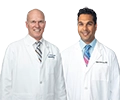
At InSight Vision Center, Dr. Eric J. Poulsen and Dr. Azhar I. Salahuddin conduct a full pre-operative evaluation including:
- Corneal topography and pachymetry — maps shape and measures thickness
- Intraocular pressure check — rules out glaucoma
- Tear production and dry eye assessment — predicts post-surgical dry eye risk
- Pupil size measurement — larger pupils increase risk of halos and glare
- Wavefront aberrometry — enables customised wavefront-guided treatment
- Medical history review — health conditions and medications assessed
Find Out If You Are a LASIK Candidate at InSight Vision Center, Fresno
At InSight Vision Center in Fresno, California, our fellowship-trained ophthalmologists — Dr. Eric J. Poulsen and Dr. Azhar I. Salahuddin — use advanced corneal mapping and wavefront diagnostic technology to assess candidacy with precision. We serve patients across the Central Valley including Clovis, Madera, Visalia, and the greater Fresno area.
Frequently Asked Questions: LASIK Candidacy
Am I too old to be a LASIK candidate?
There is no upper age limit for LASIK, but eligibility depends on eye health and whether cataracts are present. The ideal age window is generally 21–50. Patients in their 60s or older are often better served by refractive lens exchange.
What prescription qualifies for LASIK?
LASIK can treat myopia up to −12.00 diopters, hyperopia up to +6.00 diopters, and astigmatism up to 6.00 diopters of cylinder. Prescriptions outside these ranges may be better treated with ICL or refractive lens exchange.
Can I get LASIK if I have astigmatism?
Yes. LASIK can correct astigmatism up to 6.00 diopters of cylinder. Many patients with astigmatism are excellent LASIK candidates, though the treatment plan will depend on your corneal topography.
Does dry eye disqualify me from LASIK?
Mild to moderate dry eye does not necessarily disqualify you, but it must be evaluated and managed before surgery. Severe dry eye is a contraindication.
How long does my prescription need to be stable?
At least one to two consecutive years with no change greater than 0.50 diopters per year. Many surgeons prefer 24 months of stability before proceeding.
Can I get LASIK if I have thin corneas?
Not typically. Approximately 500 microns is the general minimum. If your corneas are thinner, PRK is often a suitable alternative as it does not require creating a flap.
Can I have LASIK if I currently wear contacts?
Yes, but you must stop wearing them before your evaluation — soft lenses: 2 weeks; toric soft lenses: 2–4 weeks; RGP lenses: 4 weeks; Ortho-K lenses: 6 months.
Is LASIK safe?
Yes. The complication rate is less than 1% and serious complications are rare. Risk is minimised when patients meet strict eligibility criteria.
What are my options if I am not a LASIK candidate?
Our ophthalmologists may recommend PRK (suitable for thin corneas), SMILE (flapless laser procedure), ICL (for high prescriptions), or refractive lens exchange. A consultation will clarify the best fit for your eyes.
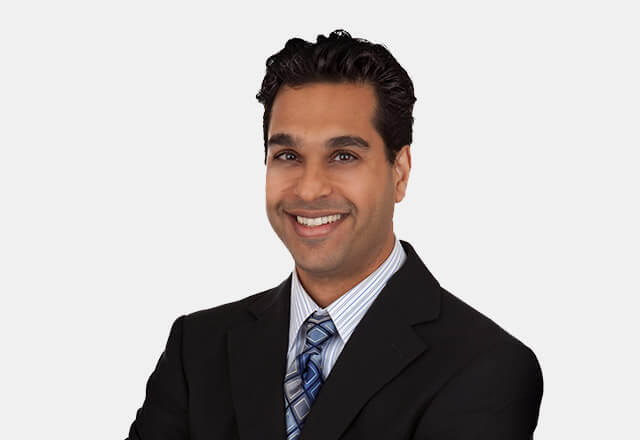
Dr. Azhar I. Salahuddin is an ophthalmologist and is fellowship-trained in cornea, external diseases, and refractive surgery. Dr. Salahuddin has been performing cataract surgery for over 19 years and specializes ocular reconstruction, corneal transplantation surgery as well as vision correction through a variety of intraocular lenses. Dr. Salahuddin is board-certified by the American Board of Ophthalmology and was trained at Boston University.