
RLE after 40: Why It’s Gaining Popularity Over LASIK?
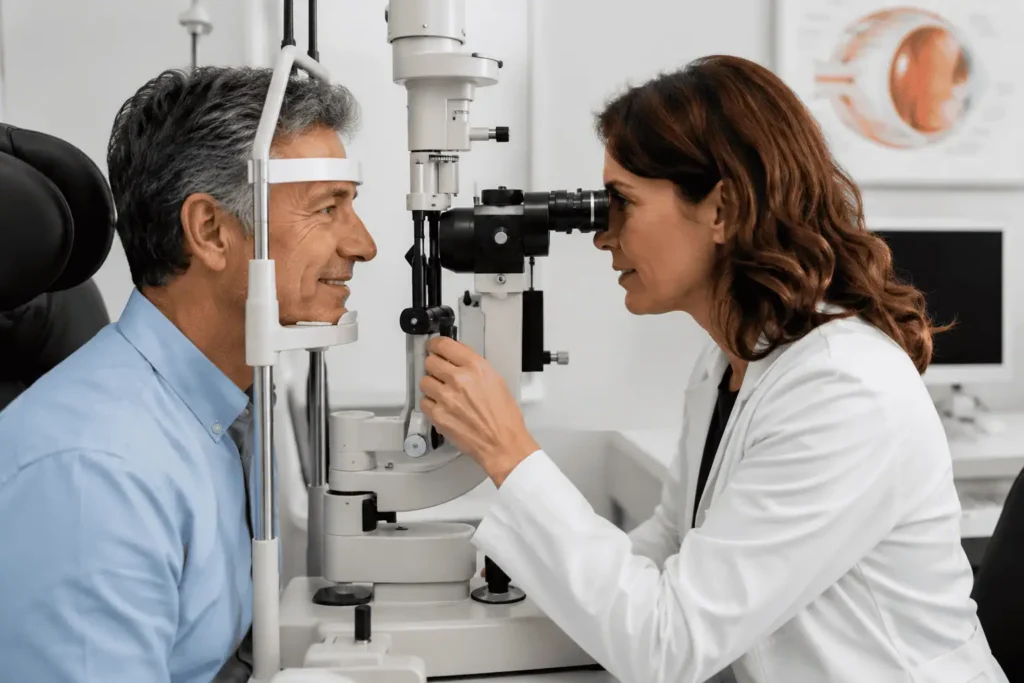
If you’re over 40 and researching vision correction, you’ve probably noticed something: LASIK isn’t always the first recommendation anymore. More eye surgeons are steering patients in this age group toward refractive lens exchange (RLE) instead, and there’s a clear reason why.
Your eyes change as you age. Presbyopia sets in, cataracts eventually become a factor, and the lens inside your eye starts losing the flexibility it had in your 20s and 30s. LASIK reshapes your cornea, but it doesn’t address any of that. RLE replaces the aging lens itself with an artificial one, which means it can correct your vision now and prevent the need for cataract surgery later.
That difference is why so many people after 40 are choosing RLE over LASIK. In this post, you’ll learn how the two procedures compare, why age changes the calculation, and how to figure out which one actually fits your eyes.
Why Does Your Vision Change After 40?
As you age, natural changes in the eye can affect how clearly you see at different distances. Some of the common problems you may notice are:
1. Presbyopia
Presbyopia remains one of the most common age-related vision problems. As you age, the natural lens inside your eye gradually loses flexibility, making it harder to focus on nearby objects. This is why many adults may need reading glasses in their 40s.
2. Dry Eye Symptoms
With age, tear production often decreases, leading to dry, irritated eyes that can feel uncomfortable. Other factors like hormonal changes, increased screen time, and medications can also contribute to dry eyes after 40.
3. Reduced Clarity in Low-Light Conditions
Age-related changes in your eyes can also come with reduced contrast sensitivity, making it challenging to see properly at night or in low-light conditions. Many adults notice increased glare, halos, or difficulty seeing clearly while driving at night.
4. Age-Related Eye Conditions
As you get older, the likelihood of developing cataracts, glaucoma, and other eye diseases increases.
Why Isn’t LASIK Always Ideal After 40?
Although LASIK over 40 can still be an option for some patients, there are several reasons it may not always provide the desired results.
1. LASIK cannot correct presbyopia
LASIK is an excellent option for correcting refractive errors by reshaping the cornea. But it doesn’t stop the natural aging process of your eyes. As a result, many patients still need reading glasses after surgery because presbyopia continues to progress.
2. Healing Can Take Longer
With age, even your body’s healing process often slows down. As a result, adults over 40 may experience longer recovery periods and may be more likely to develop dry eye symptoms after LASIK.
3. Early Eye Conditions May Affect Eligibility
Some adults may even begin experiencing early cataracts or other age-related eye issues during their 40s and 50s. These changes can limit the effectiveness of LASIK and may make other procedures more appropriate.
Why Are More People Choosing RLE Over LASIK After 40?
1. It Corrects Presbyopia
RLE can successfully address a common age-related issue like presbyopia. Unlike LASIK, which corrects refractive error by reshaping the cornea, RLE rather replaces the natural lens. This allows the advanced lens implants to improve near, intermediate, and distance vision.
2. It’s a Great Option for Thin Corneas
Patients who aren’t the ideal candidates for LASIK due to thin corneas may still qualify for RLE. This is because the procedure doesn’t involve reshaping your cornea, so its thickness is less of a concern.
3. Advanced Lens Technology Provides More Choices
Modern intraocular lenses offer customized vision correction options. Depending on your needs, your surgeon may recommend multifocal, trifocal, or other premium lens technologies.
4. It Eliminates Future Cataracts
One reason why refractive lens exchange is ideal after your 40s or 50s is that the procedure replaces the eye’s natural lens with a permanent artificial intraocular lens (IOL) before cataracts develop. And since cataracts form in the natural lens, patients who undergo RLE will not need cataract surgery in the future.
5. Greater Freedom From Glasses
Many patients also seem to enjoy significantly reduced dependence on glasses after RLE. This can make everyday activities such as reading, driving, and using digital devices more convenient.
6. A Long-Term Vision Correction Strategy
Unlike procedures that only reshape the cornea, RLE replaces the aging lens itself. This creates a lasting solution that continues to provide vision benefits for years to come.
7. Proven Safety & Reliable Outcomes
RLE is based on the same technology and surgical techniques used in modern cataract surgery. Decades of experience have helped establish the procedure as a safe and trusted option for eligible patients.
Consider RLE Options at InSight Vision Center, Fresno, CA
For adults experiencing age-related vision changes, finding the right solution starts with a comprehensive eye evaluation.
At InSight Vision Center, our experienced eye doctors carefully assess your vision, lifestyle, eye health, and long-term goals to determine whether RLE may be appropriate for you.
Patients throughout Fresno and the surrounding communities choose InSight Vision Center because of our advanced technology, experienced surgical team, and commitment to personalized care. We take the time to explain every option so you can make a confident decision about your vision!
Wondering if RLE is right for your eyes after 40?
Schedule your consultation with InSight Vision Center today.
This article is general information and isn't a substitute for an eye exam.