
Can LASIK Improve Your Night Vision?
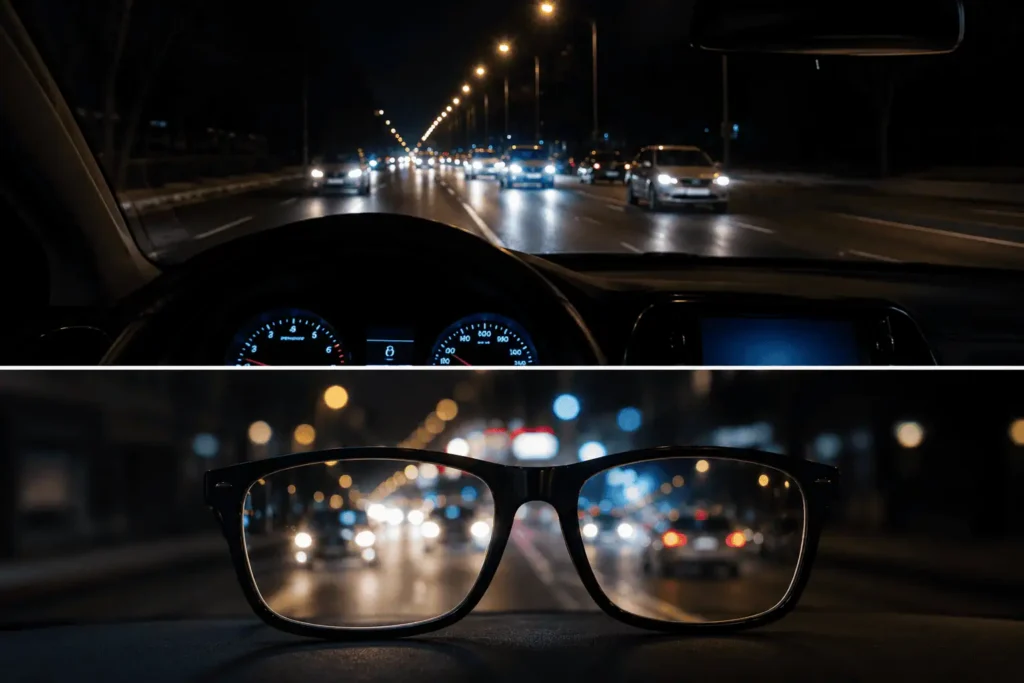
Quick Answer
Yes, LASIK can improve night vision when the problem stems from refractive errors like nearsightedness, farsightedness, or astigmatism. By reshaping the cornea, LASIK helps light focus correctly on the retina, which can reduce glare, halos, and blurriness after dark. Some patients notice temporary night vision changes during healing, but most see improvement within a few weeks to a few months.
Night vision problems can make simple activities feel stressful, especially when driving after dark or moving through dimly lit spaces. Headlights may appear too bright, signs can look blurry, and focusing becomes harder as light decreases. In this blog, we will take a look at whether LASIK can improve night vision, what causes these nighttime visual issues, and how the procedure may help you see more clearly in low-light conditions.
Does LASIK Help With Night Vision?
Yes, LASIK eye surgery can improve night vision in many cases, especially if the difficulty is caused by refractive errors like near-sightedness, farsightedness, or astigmatism. By reshaping the cornea and helping light focus correctly on the retina, LASIK can reduce visual distortions that become more noticeable at night. That said, results vary from person to person, and some patients may notice temporary night vision disturbances during the healing phase.
What Causes Poor Night Vision?
Night vision problems usually come down to how well your eyes focus and process light in low-light conditions. Here are the most common causes.
1. Refractive Errors
Nearsightedness, farsightedness, and astigmatism keep light from focusing correctly on the retina. Instead of forming a single sharp point of focus, light spreads across the retina, creating blur. This effect gets worse at night because pupils naturally widen in the dark to let in more light. A larger pupil means light passes through a bigger portion of an imperfectly shaped cornea, which amplifies the blur, glare, and haze that refractive errors cause.
Learn more about: 4 Different Types of Refractive Errors of Eyes
2.Higher-Order Aberrations
Standard glasses and contacts are built to correct basic refractive errors, but they can’t account for smaller, more complex irregularities in the eye’s optical system called higher-order aberrations. These subtle imperfections change how light rays bend as they travel through the cornea and lens, scattering some rays instead of focusing them cleanly. The result shows up most in low light, when pupils dilate and more of the irregular surface is exposed, causing blur, glare, and halos that daytime vision often masks.
3. Irregular Corneal Shape
The cornea is supposed to be a smooth, evenly curved surface that bends light toward a single focal point. When it’s uneven, whether from natural shape, previous injury, or conditions like astigmatism, light entering the eye scatters across multiple points instead of one. At night, this scattering becomes more visible against dark backgrounds, which is why headlights, streetlights, and other bright points of light often appear surrounded by halos or streaking starbursts.
How LASIK Improves Night Vision?
LASIK improves night vision by addressing the optical issues that interfere with how light travels through the eye. The goal is not simply sharper eyesight, but also more accurate focusing under different lighting conditions.
Here’s how LASIK may help improve night vision:
1. Reduced Higher-Order Aberrations
Higher-order aberrations are small visual imperfections that standard glasses or contact lenses may not fully correct.
These irregularities can cause:
- Blurry night vision
- Glare
- Halos
- Reduced sharpness
Advanced LASIK technology can measure these tiny distortions and create a more personalized correction. This often leads to clearer vision, especially in low-light situations.
2. Optimized Cornea Shape
The cornea plays a major role in how your eye focuses light. If the cornea has an uneven shape, light may scatter instead of focusing properly.
LASIK reshapes the cornea to create a smoother and more balanced surface. This helps light enter the eye more accurately, improving visual clarity in darker environments.
3. Improved Contrast Sensitivity
Many people with untreated refractive errors struggle to notice fine details at night.
After LASIK, some patients experience improved contrast sensitivity because their eyes can focus more efficiently. This can help when driving at night, reading signs, or navigating dimly lit spaces.
4. Reduced Glare and Light Scattering
Irregular vision correction can cause light to scatter inside the eye. This scattering often creates glare, halos, or difficulty adjusting between dark and bright areas.
LASIK may reduce this issue by correcting the pathway light takes into the eye, resulting in smoother and clearer vision.
5. Improved Peripheral Vision
Glass frames and lens edges sometimes limit side vision, especially in darker conditions.
Since LASIK corrects vision directly at the corneal level, patients no longer rely on corrective lenses after surgery. This may create a more natural field of vision, which can be helpful when driving or moving around at night.
What to Expect After LASIK Surgery?
Recovery plays a big role in how quickly night vision after LASIK settles. Most patients notice some light sensitivity, mild glare, or dryness in the first few days, and that’s a normal part of the eye adjusting to its new shape.
- The first 24 to 48 hours. Vision is often blurry or hazy right after surgery. Rest and prescribed eye drops help the cornea begin healing. Many patients notice a big improvement by the next morning, though night driving isn’t recommended yet.
- The first one to two weeks. Glare and halos are usually most noticeable during this window, especially around headlights or streetlights. Dryness can also make night vision feel less sharp than it will later on. Sticking to your eye drop schedule and avoiding eye strain supports steadier healing.
- One to three months. This is when most higher-order aberrations settle and night vision continues to sharpen. Halos and starbursts fade for the majority of patients, and contrast sensitivity keeps improving as the cornea fully stabilizes.
- Beyond three months. Most patients reach their final visual outcome by this point. Night vision is typically clear and comfortable, though a small number of people with larger pupils or higher prescriptions may notice mild effects linger a bit longer.
Following your surgeon’s aftercare plan, attending follow-up visits, and giving your eyes time to adjust are the biggest factors in how quickly night vision improves after LASIK.
Improve Your Night Vision with LASIK at InSight Vision Center
If night driving or low-light visibility is something you struggle with, a LASIK eye surgery can fix the problem. At InSight Vision Center in Fresno CA, the focus is on understanding your eyes before recommending any procedure.
A detailed LASIK evaluation helps determine whether you are a suitable candidate. This includes checking your cornea, measuring your vision accurately, and understanding any underlying issues that might affect your results. Based on this, a personalised treatment plan is created so that your correction is tailored to your eyes
Patients also benefit from a free LASIK consultation, which gives you a clear idea of what to expect, without any pressure to commit.
Get Rid of Your Night Vision Problems
Get Free LASIK Consultation at InSight Vision Center in Fresno, CA
Final Thoughts
Night vision problems can affect confidence, comfort, and even safety. Difficulty seeing clearly after dark often comes from refractive errors, glare, or poor light processing within the eye.
LASIK may help improve these issues by reshaping the cornea and correcting how light enters the eye. While every patient’s experience is different, many people notice clearer vision and better comfort in low-light environments after treatment.
The best way to know if LASIK can improve your night vision is through a professional evaluation. Understanding your eye health and vision goals is the first step toward making an informed decision.
Frequently Asked Questions (FAQs)
Will I have halos or glare after LASIK?
Some patients notice halos, glare, or starbursts during the healing period after LASIK. These effects are usually temporary and tend to improve as the eyes recover. People with larger pupils may occasionally experience symptoms for a longer period.Can LASIK cause night vision problems?
Yes, temporary night vision disturbances can happen after LASIK. During recovery, some people notice glare, halos, or increased light sensitivity. These effects generally improve over time.How long do night vision issues last after LASIK?
For most patients, night vision symptoms improve within a few weeks to three months. In rare situations, certain visual effects may last longer depending on healing and eye characteristics.Is LASIK worth it if I struggle with night vision?
LASIK can be worthwhile if your night vision problems are linked to refractive errors. Many patients experience clearer vision and greater comfort at night. A consultation helps determine whether LASIK is the right option for you.How can I reduce night vision problems after LASIK?
Following aftercare instructions carefully can support better healing. Using prescribed eye drops, avoiding eye strain, and attending follow-up appointments may help reduce temporary visual disturbances.Can dry eyes after LASIK affect night vision?
Yes, dry eyes can sometimes cause blurry vision, glare, or halos at night. Lubricating eye drops and proper post-surgery care can help manage dryness during recovery.Does age affect night vision outcomes after LASIK?
Age can influence healing and overall visual outcomes. Older patients may also experience age-related vision changes that LASIK does not fully correct, such as presbyopia.Are there alternatives to LASIK for improving night vision?
Yes, alternatives may include PRK, SMILE, or prescription eyewear. The right option depends on your eye health, vision needs, and lifestyle preferences.This article is general information and isn't a substitute for an eye exam.