
Last Updated on March 16, 2026 by Aaron Barriga
If you or someone you care about has been diagnosed with Retinitis Pigmentosa, it’s natural to have a lot of questions. What does it mean? How will it affect daily life? Is there any treatment? This blog is here to help you understand everything you need to know to about it.
What is Retinitis Pigmentosa?
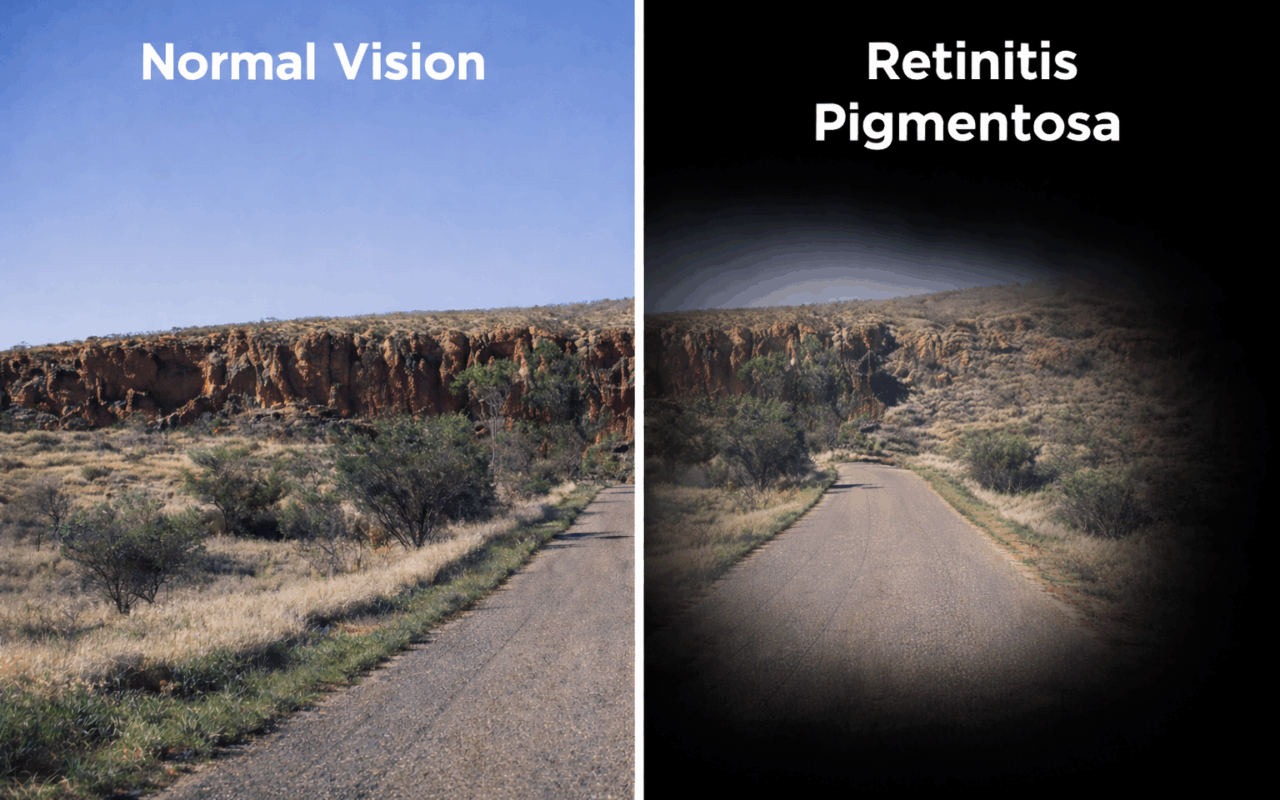
Retinitis Pigmentosa is a group of inherited eye disorders that gradually damage the retina. Early symptoms often include night blindness and difficulty adjusting to low light. Over time, side vision may narrow, leading to tunnel vision and sometimes central vision loss. While there is no cure, specialist care can help manage symptoms and slow progression.
What Are the Symptoms of Retinitis Pigmentosa?
If you have retinitis pigmentosa, the symptoms usually show up slowly and may get worse over time. Here’s what you might notice in your daily life:
- Trouble Seeing in Low Light (Night Blindness) – Difficulty seeing in dim light, such as dark rooms or while driving at night.
- Blind Spots on the Edges of Your Vision – Loss of side vision, causing you to miss objects or bump into things.
- Narrowing of Your Field of Vision (Tunnel Vision) – Vision gradually narrows, making it harder to move in crowds or unfamiliar spaces.
- Difficulty Reading or Doing Close Work – Reading small text or focusing on fine details becomes challenging.
- Trouble Recognizing Approaching Faces – Faces may look blurry, making it hard to recognize people from a distance.
- Difficulty Detecting Different Colors – Colors may appear faded or harder to tell apart, especially in low light.
What Are the Causes of Retinitis Pigmentosa?
Retinitis Pigmentosa usually happens because of genetic reasons, but there can be other triggers too. Here’s a closer look at them:
-
Genetics: The Main Cause
Most people with RP have inherited it. This means the condition runs in the family, passed down through faulty genes that affect the retina’s light-sensing cells (called photoreceptors).
Here’s how it’s passed on:
- Autosomal Dominant: If even one parent has the gene mutation, it can be passed to the child. In this case, just one altered gene copy is enough to cause RP.
- Autosomal Recessive: Both parents carry the faulty gene, but they usually don’t have RP themselves. For the child to be affected, both gene copies must be mutated.
- X-linked: This type involves genes on the X chromosome. Males are often more severely affected since they have only one X chromosome, while females may carry the gene but show fewer symptoms.
- Spontaneous Mutations: In some people, RP doesn’t run in the family. It starts because of a new mutation that happened on its own. This is called a de novo mutation.
-
Conditions Linked with RP
In some cases, RP is part of a bigger condition. One well-known example is:
- Usher Syndrome: This is a genetic disorder where people experience both hearing loss and Retinitis Pigmentosa. It can affect how a person sees and hears over time.
-
Other Possible Causes
While genetics is the main reason, there are a few less common causes too.
- Certain Medications: Some drugs can cause RP-like symptoms as a side effect. These cases are rare but important to be aware of.
- Infections: Infections such as CMV (cytomegalovirus) can damage the retina and lead to inflammation or retinitis, which may resemble RP.
- Eye Injuries: Trauma to the eye, especially if it’s severe, can also lead to retinal damage that mimics or triggers symptoms like those seen in RP.
How to Diagnose Retinitis Pigmentosa?
-
Dilated Eye Exam and Fundoscopy
The doctor uses dilating drops to examine the retina and look for early signs of RP, such as pigment clumping, narrowed blood vessels, and a pale optic nerve.
-
Visual Field Testing
This test checks your side vision, which is usually the first to go in RP. You look straight ahead while lights flash in different areas of your visual field. If there’s a ring-shaped blind spot or a narrowing field of view, it helps confirm the diagnosis.
-
Electroretinography (ERG)
ERG measures how your retina responds to light. A special contact lens records tiny electrical signals when light hits the eye. In RP, the response is often weak or missing, especially from the rods, which are the light-sensitive cells affected early.
-
Optical Coherence Tomography (OCT)
OCT takes cross-sectional images of your retina. It helps doctors see if the retinal layers have become thin or swollen. This is useful for spotting complications like macular edema, which can happen in people with RP.
-
Genetic Testing
Since RP often runs in families, a blood test can check for known gene mutations like RPE65 or USH2A. This helps confirm the type of RP, offers insight into how it may progress, and can guide future treatments like gene therapy.
-
Dark Adaptometry
This test checks how well your eyes adjust to darkness. In the early stages of RP, people often struggle to see in low light. Measuring this helps track how far the disease has progressed.
Treatment Options for Retinitis Pigmentosa
While there is no complete cure for RP yet, there are several treatments and support options that can help you manage the condition and maintain quality of life:
-
Vision Aids and Assistive Devices
Low-vision tools like magnifiers, special lighting, talking apps, or screen readers can help you read, move around safely, and stay independent.
-
Occupational Therapy
Occupational therapists teach practical skills to make everyday activities easier. They can show you how to adapt your home or workplace and suggest tools for safer movement and better access.
-
Special Education or Vocational Services
For children or working adults, tailored education plans or job training programs can help manage vision loss and keep life on track. These services support learning and earning with practical adjustments.
-
Counseling or Support Groups
Living with RP can be emotionally challenging. Talking to a counselor or joining a support group can help you process the diagnosis, handle stress, and connect with others going through similar experiences.
-
Gene Therapy
In some cases, gene therapy may be an option. For example, people with a specific mutation in the RPE65 gene may benefit from a treatment called Luxturna. It involves injecting a healthy copy of the gene into the retina to restore some vision.
-
Vitamin A Supplements
Some studies suggest that Vitamin A palmitate may slow the progression of RP in certain people. However, it should only be taken under medical supervision, as high doses can harm the liver and bones.
-
Prosthetic Devices (Retinal Implants)
Also known as the “bionic eye,” retinal implants are electronic devices that replace lost photoreceptor function. They do not restore full vision but can provide light perception and improve spatial awareness in advanced cases.
Get a Proper Diagnosis for Retinitis Pigmentosa at InSight Vision Center, California
If you’re noticing gradual changes in your vision, especially in low-light conditions or side vision, it’s worth getting checked for Retinitis Pigmentosa (RP). At InSight Vision Center in Fresno, California, we offer detailed eye exams using advanced diagnostic tools to detect RP early and accurately.
During your visit, we review your medical history, check your vision, and use advanced tests to evaluate your eye health. Our specialists then explain the results and create a personalized plan to help preserve your vision.
Even though there is no cure yet for RP, early detection and proper support can make a big difference in how you manage it.
Get a Professional RP-focused consultation at InSight Vision Center in California
Frequently Asked Questions (FAQs)

Dr. Azhar I. Salahuddin is an ophthalmologist and is fellowship-trained in cornea, external diseases, and refractive surgery. Dr. Salahuddin has been performing cataract surgery for over 19 years and specializes ocular reconstruction, corneal transplantation surgery as well as vision correction through a variety of intraocular lenses. Dr. Salahuddin is board-certified by the American Board of Ophthalmology and was trained at Boston University.