
RLE vs Cataract Eye Surgery: Which Procedure Is Right for Your Vision?
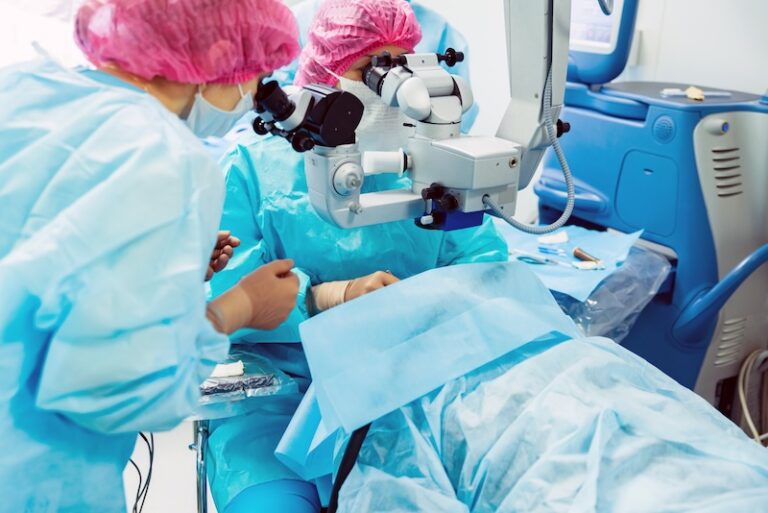
If you’ve been researching ways to improve your vision, you’ve probably come across both Refractive Lens Exchange (RLE) and cataract surgery. The confusing part is that they sound remarkably similar. Both procedures involve removing the eye’s natural lens and replacing it with an artificial one. Both can improve vision. Both have relatively quick recovery times.
So why are they considered different procedures?
The answer comes down to the reason the surgery is being performed. One is typically chosen to reduce dependence on glasses and address age-related vision changes. The other is performed to remove a cataract that is already affecting vision.
Understanding that distinction can make it much easier to determine which option may be appropriate for your situation.
In this guide, we’ll look at how RLE and cataract surgery compare, who each procedure is designed for, what recovery looks like, and how eye doctors decide which treatment path makes the most sense.
RLE vs Cataract Surgery: A Side-by-Side Comparison
Although the procedures share many similarities, the patient goals are often very different.
| Feature | Refractive Lens Exchange (RLE) | Cataract Surgery |
|---|---|---|
| Purpose | RLE is primarily a vision correction procedure. It is chosen by people who want to reduce their reliance on glasses or contact lenses, particularly when age-related vision changes make reading, driving, or other daily activities more difficult. | Cataract surgery is performed to restore vision that has been reduced by a cataract. The goal is to remove the cloudy lens and help the patient see clearly again. |
| What Condition Is Being Treated? | RLE is commonly recommended for presbyopia, significant farsightedness, and certain cases of nearsightedness where laser procedures may not be the best fit. | Cataract surgery specifically treats cataracts, which occur when the eye’s natural lens becomes cloudy and affects vision. |
| Condition of the Natural Lens | During RLE, the natural lens is still clear. It is replaced to improve visual performance and reduce future vision problems. | During cataract surgery, the natural lens has already become cloudy and is replaced to restore lost vision. |
| Who Typically Has the Procedure? | Most RLE patients are over 40 and are beginning to notice age-related vision changes, especially difficulty focusing on nearby objects. | Cataract surgery is most commonly performed in adults over 60, although cataracts can develop earlier in some people. |
| Medical Necessity | RLE is considered an elective procedure because it is chosen to improve vision rather than treat a medical condition that requires surgery. | Cataract surgery is generally considered medically necessary once cataracts begin interfering with daily activities and quality of life. |
| Main Goal | The main objective is greater freedom from glasses and contact lenses at multiple distances. | The primary goal is clearer, sharper vision after cataract-related vision loss. |
| Lens Options Available | Patients often select premium lens implants such as multifocal, EDOF, or toric lenses to address multiple vision needs at once. | Cataract surgery also offers several lens choices, including monofocal, multifocal, and toric lenses depending on the patient’s goals. |
| Insurance Coverage | Since RLE is considered elective vision correction, insurance plans generally do not cover the procedure. | Cataract surgery is often covered by insurance when it is medically necessary, although premium lens upgrades may involve additional costs. |
| Cost Considerations | Patients usually pay the full cost themselves, making the out-of-pocket expense higher. | Insurance coverage often reduces the amount patients need to pay directly. |
| Recovery Experience | Recovery is usually straightforward, with many patients noticing improved vision within a few days and continuing improvement over the following weeks. | Recovery is similarly quick, with most patients returning to many normal activities shortly after surgery. |
| Expected Visual Outcome | RLE focuses heavily on reducing dependence on corrective eyewear while improving overall vision quality. | Cataract surgery focuses on restoring vision that has been lost because of a cloudy lens. |
| When It Is Usually Recommended | Eye doctors may recommend RLE when LASIK is not suitable, when presbyopia becomes frustrating, or when a patient wants a long-term solution for refractive errors. | Cataract surgery is recommended when cataracts begin affecting everyday tasks such as reading, driving, watching television, or recognizing faces. |
Why These Procedures Are Often Confused?
One reason people mix up RLE and cataract surgery is because the surgery itself looks very similar from a technical standpoint.
In both procedures, the eye’s natural lens is removed and replaced with an artificial intraocular lens, often called an IOL. The surgical techniques, technology, and recovery process can be nearly identical.
What changes is the reason for replacing the lens.
Think of it this way. Cataract surgery removes a lens that has already become cloudy. RLE replaces a lens before that cloudiness develops, mainly to improve how the eye focuses.
The destination may look similar, but the journey starts from a different place.
Understanding Refractive Lens Exchange
What Is RLE?
Refractive Lens Exchange is a lens replacement procedure used to correct vision problems caused by aging or refractive errors. During surgery, the eye’s natural lens is replaced with an artificial lens selected to match the patient’s visual needs. The goal is often to reduce dependence on glasses while providing clearer vision at one or more distances.
Who Usually Considers RLE?
Many RLE patients reach a point where glasses and contact lenses are becoming increasingly frustrating.
Reading glasses may be needed everywhere. Multifocal lenses may not provide the convenience they once did. Some patients discover they are no longer ideal candidates for LASIK because age-related changes inside the eye are becoming more significant than the shape of the cornea.
In those situations, RLE may offer a longer-term solution.
Conditions RLE Can Help Address
RLE is commonly considered for:
- Age-related near vision loss (presbyopia)
- Moderate to high farsightedness
- Certain cases of nearsightedness where laser vision correction may not be ideal
- Patients seeking greater visual independence
Why Some Patients Choose RLE
One of the biggest advantages of RLE is that it addresses both current and future concerns.
Because the natural lens is removed, cataracts cannot develop later in life. Patients also gain the opportunity to select lens technology that aligns with their lifestyle, whether that means improved distance vision, better near vision, or a broader range of focus.
Recovery After RLE
Most patients notice vision improvements within the first few days. Mild blurriness, dryness, or light sensitivity can occur during the early healing period.
Many people return to work and routine activities within about a week. Vision typically continues to stabilize over several weeks, with full healing occurring over the following month or two.
Understanding Cataract Eye Surgery
What Is Cataract Surgery?
Cataract surgery removes the eye’s cloudy natural lens and replaces it with a clear artificial lens. It is the only proven way to eliminate a cataract and restore vision that has been affected by lens clouding.
Today, cataract surgery is one of the most commonly performed procedures in the world and has helped millions of people regain clearer vision.
How Cataracts Affect Everyday Life
Cataracts often develop gradually.
At first, you may simply notice that your glasses do not seem as effective as they once were. Over time, vision may become increasingly blurry. Colors may appear dull. Night driving can become more difficult because of glare and halos around lights.
Many patients describe it as looking through a foggy window that never quite becomes clear.
When those changes begin interfering with daily activities, cataract surgery is often recommended.
Benefits of Cataract Surgery
Patients commonly report:
- Sharper and clearer vision
- Reduced glare around headlights and bright lights
- Improved color perception
- Greater confidence during daily activities
- Reduced dependence on glasses in some situations
Who May Be a Candidate?
Cataract surgery is often recommended when vision changes begin affecting quality of life.
This might include difficulty reading, driving, recognizing faces, working, or enjoying hobbies. If stronger glasses are no longer providing meaningful improvement, it may be time to discuss surgical options with an eye doctor.
Recovery After Cataract Surgery
Recovery is generally smooth and predictable.
Many patients notice visual improvement within the first few days. Reading, watching television, and other light activities can usually be resumed quickly. Most people return to normal routines within a week or two, although complete healing may take several weeks.
Which Procedure Makes More Sense for You?
The answer depends on what is causing your vision problems.
If your main goal is reducing dependence on glasses and you’re dealing with presbyopia or significant refractive errors, RLE may be worth exploring.
If cataracts are already affecting your ability to see clearly, cataract surgery is typically the more appropriate option.
The challenge is that many people fall somewhere in between. Early lens changes, evolving prescriptions, lifestyle needs, and overall eye health can all influence the decision.
That’s why a comprehensive eye evaluation is so important.
Get Guidance From the Team at InSight Vision Center
Choosing between RLE and cataract surgery isn’t always straightforward. Factors such as your age, prescription stability, eye health, visual goals, and the presence of cataracts all play a role in determining the most suitable treatment.
At InSight Vision Center in Fresno, our eye doctors take the time to evaluate the complete picture before making a recommendation. Through a comprehensive eye examination, we can assess your vision, discuss available treatment options, and help you understand which procedure best aligns with your needs and lifestyle.
Ready to explore your options?
Get Consultation at InSight Vision Center in Fresno, CA Schedule an appointment today.
Frequently Asked Questions
Is refractive lens exchange the same as cataract surgery?
The procedures are very similar from a surgical perspective, but they are performed for different reasons. RLE is typically chosen to improve vision and reduce reliance on glasses, while cataract surgery is performed to remove a cloudy lens that is affecting sight.
Can I get RLE if I already have early-stage cataracts?
Possibly. Some patients who are considering RLE discover early cataract changes during their examination. In these cases, your surgeon will evaluate whether lens replacement should be approached as refractive surgery or cataract surgery based on your eye health and visual goals.
What happens if cataracts are left untreated?
Cataracts generally worsen over time. Vision may become increasingly blurry, colors may appear faded, and tasks such as driving or reading can become more difficult. Left untreated, advanced cataracts can significantly affect quality of life.
Is RLE safe for people with high myopia or hyperopia?
RLE can be an excellent option for some patients with significant refractive errors, particularly when LASIK or other laser procedures may not provide the desired results. An eye examination is needed to determine suitability.
Can cataract surgery provide some of the same benefits as RLE?
Yes. Modern lens implants used during cataract surgery can often correct certain refractive errors as well, helping some patients reduce their dependence on glasses while restoring clearer vision.
Which procedure has a faster recovery?
Recovery timelines are generally similar because both procedures involve replacing the eye’s natural lens. Most patients notice meaningful visual improvement within the first several days.
Can someone who has already had RLE develop cataracts later?
No. Since the natural lens is removed during RLE, cataracts cannot form afterward. This is one reason some patients view RLE as a long-term vision correction solution.
This article is general information and isn't a substitute for an eye exam.