
6 Essential Winter Eye Care Tips

Winter weather can be especially problematic if you already have a sensitive body. The skin gets dry, hands and feet get cold, and eyes get teary – these are some of the many problems most people face during the winter months.
Winters can cause several different eye problems. Exposure to harsh winds during the winter months can result in itchy and dry eyes. While it may not be possible to avoid dry eyes altogether, here are some eye care tips to consider this winter.
6 Eye Care Tips For Winters
1. Keep Yourself Hydrated

To maintain healthy eyes, it is essential to keep yourself hydrated during winter. Consuming healthy fluids like water, green tea, and lemon water instead of caffeine-rich beverages like coffee and tea is ideal. This will prevent the body from getting dehydrated.
2. Use Warm Washcloth Compression to Soothe Dry Eyes
People with dry eyes typically experience tear secretion. A warm washcloth compression on the eyes can reinstate the moisture in your eyes. This further helps soothe itchy, irritated, and swollen eyes and significantly improves your vision.
3. Reduce Excessive Tearing of Eyes
 The cold wind and air make some people tear excessively, which can cause blurry vision. Excessive runny eyes and tearing is usually due to seasonal allergies, cold air, and biting winds.
Tips to reduce excessive tearing of eyes:
- Wipe and swab your eyes with a clean tissue or a soft cloth.
- Protect your eyes while being outdoors by wearing sunglasses.
- Try an allergy medication or over-the-counter eye drops to reduce the effect of seasonal allergies.
4. Prevent Dry Eyes in Winter
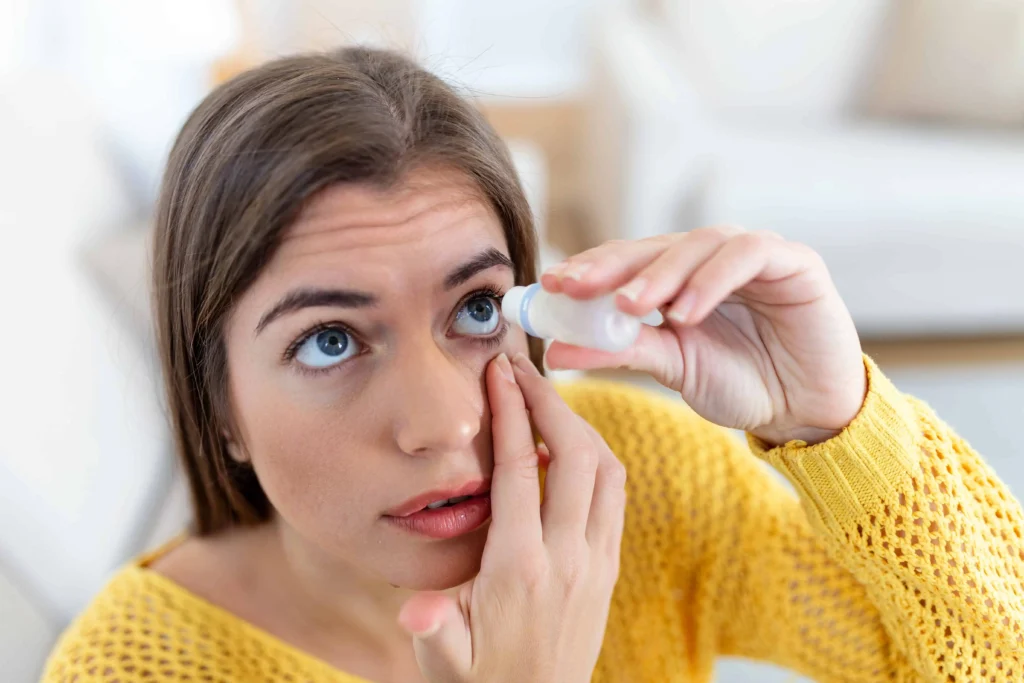
Dry eye is a condition that happens when a person cannot produce enough tears to lubricate the eyes. The external and internal air tends to be drier in the winter. As the eye needs moisture, this can be challenging, and it results in dry eyes.
Tips to prevent dry eyes:
- A great way to protect the eyes from winter dryness is wearing sunglasses.
- Avoid dryness by using over-the-counter eye drops and keeping your eyes moisturized at all times. But be mindful of the fact that overusing these products might damage your eyes.
Read more about Dry Eyes in Winter here!
5. Reduce Eye Redness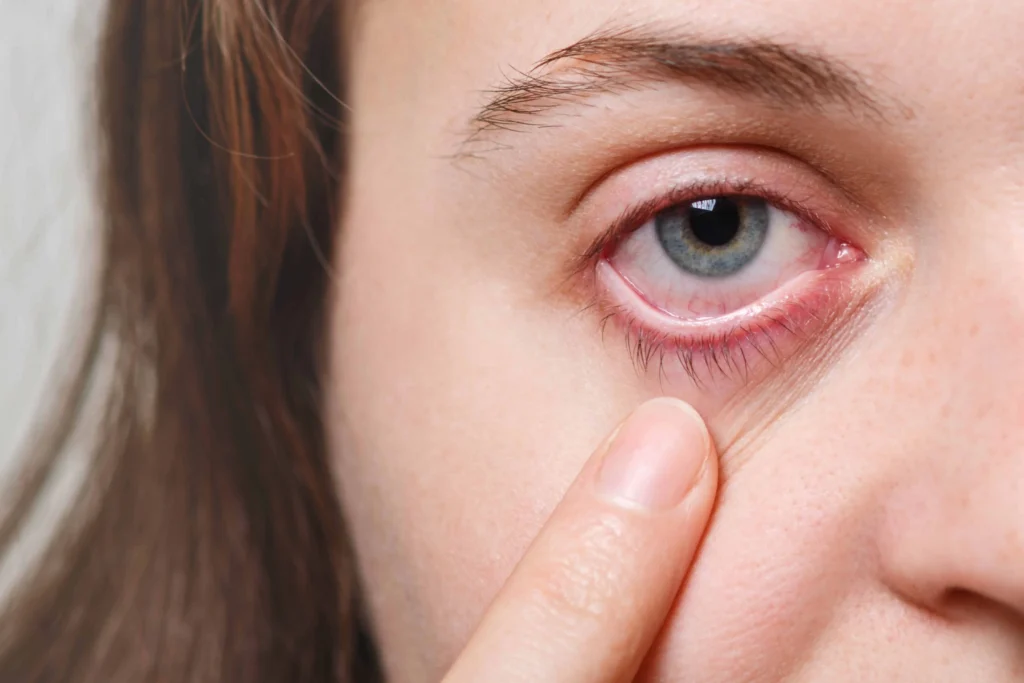
Extreme winter conditions can cause inflammation, tenderness, and redness in the eye area. This may result in the decolorization of eyes or swollen eyelids, causing seasonal allergies, snow blindness or dry eyes.
Tips to prevent redness:
- Apply a cool compress like a damp washcloth and take an over-the-counter painkiller to reduce the soreness and redness.
- If your symptoms persist, consult an eye doctor to determine the cause of the irritation.
6. Protect Your Eyes from Reflected UV Rays
 Ultraviolet light injures the eye’s surface, which results in inflammation of the cornea. This may require antibiotic eye drops to treat the infection. Symptoms may include pain, sensitivity to light, or redness, pain, and sensitivity to light. Prolonged exposure to UV light is also a major contributing factor in the formation of clouding of the lens or cataracts clouding of the lens in the eye that affects vision.
Tips to prevent eyes from reflected UV rays:
- Wear polarized sunglasses with at least UV400 protection and shield the eyes with eyeglasses.
- If you’re hitting the icy slopes, make sure your sunglasses and goggles have polycarbonate lenses with UV protection.
We don’t often think of winter as the time of the year when our eyes need superior protection, but unfortunately, they do. Wind, dry air, and reflected UV light create unique challenges that make it essential to take the extra precaution for our eyes while being indoors and outdoors. And while COVID-19 prevails with its undeterred infectious rage, it is critical to be more cautious about other winter-induced seasonal flu by keeping the level of immunity up.
If you’re facing problems during winter, it’s best to see your eye doctor soon. Don’t delay! Contact the eye experts at InSight Vision Center to get your eyes tested and treated if needed.
This article is general information and isn't a substitute for an eye exam.