
Contoura Vision vs LASIK: Which One is Right for You?
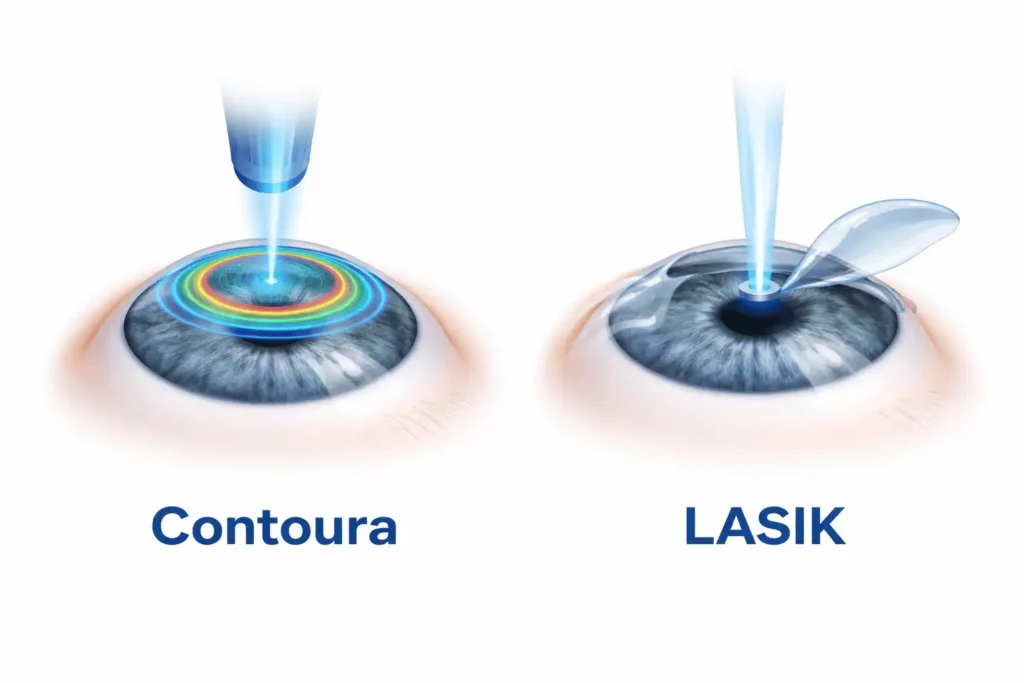
If you are planning laser eye surgery, Contoura Vision and LASIK are two common options you may hear about. Both help correct vision problems like nearsightedness and astigmatism, but they use different levels of technology. Understanding the difference between Contoura and LASIK can help you choose the right treatment for your eyes. In this blog, we explain both options in simple, easy-to-understand terms.
Contoura Vision vs LASIK: What is the Difference?
Both Contoura Vision and LASIK are laser eye surgeries used to correct vision problems like near-sightedness, far-sightedness, and astigmatism. Understand the difference:
| Aspect | Contoura Vision | LASIK |
|---|---|---|
| Ideal Candidate | Suitable for people with myopia, hyperopia, or astigmatism who want highly precise vision correction. Often recommended for patients with irregular corneal surfaces. | Suitable for people with stable vision and common refractive errors. Works well when the corneal shape is regular. |
| Surgery Technique | Uses a topography-guided laser approach. The laser treatment is planned using a detailed 3D map of the cornea. | Uses a standard laser correction based on general measurements of the eye. |
| Vision Conditions Treated | Myopia, hyperopia, astigmatism, and subtle corneal irregularities affect visual clarity. | Myopia, hyperopia, and astigmatism. |
| Recovery Time | Fast recovery. Most people notice clear vision within 24 hours. | Fast recovery. Vision usually improves within 24 to 48 hours. |
| Cost Range (USD) | Usually costs between $2,500 to $5,000 per eye, depending on the clinic and location. | Usually costs between $1,500 to $3,000 per eye, depending on the technology used. |
| Risk of Side Effects | Lower chances of glare, halos, and starbursts due to personalised correction | Slightly higher chance of glare or halos, especially at night. |
What is LASIK Eye Surgery?
LASIK eye surgery is a quick, commonly performed procedure used to correct nearsightedness, farsightedness, and astigmatism. A laser reshapes the cornea to improve how light focuses on the retina, resulting in clearer vision. Most patients notice improved vision within a day or two and often reduce or eliminate the need for glasses or contacts. The procedure is done using numbing eye drops, with a fast recovery and minimal downtime
What Are the Benefits of LASIK?
If you’re thinking about getting LASIK, here’s what you can expect from the procedure:
- Freedom from Eyewear – LASIK eliminates the need for glasses or contact lenses, offering greater comfort and convenience in daily life.
- Fast and Effective Results – Most people see clearer vision within 24–48 hours after LASIK, with a quick procedure and minimal recovery time, allowing a fast return to daily activities.
- Corrects Common Vision Problems – LASIK is used to treat nearsightedness (myopia), farsightedness (hyperopia), and astigmatism.
- High Success and Satisfaction – Most patients achieve 20/25 vision or better after LASIK, with high satisfaction rates and consistently positive outcomes worldwide.
- Improved Lifestyle – Clearer vision after LASIK makes everyday activities like driving, working, traveling, and sports easier and more enjoyable.
- Quick and Painless Procedure – LASIK is a painless procedure performed with numbing eye drops, and most patients go home the same day with only mild, short-term discomfort.
- Long-Term Savings – Although LASIK has an upfront cost, it can save money over time by reducing expenses on glasses, contact lenses, and routine vision care.
Who Is the Ideal Candidate for LASIK?
Not everyone is a perfect fit for LASIK. Here’s what doctors usually look for before recommending the procedure:
- Age – You should be at least 18 years old, but many surgeons prefer patients to be 21 or older.
- Vision Stability – Your eye prescription should have stayed roughly the same for at least one year.
- Refractive Error – LASIK works well for people with mild to moderate levels of nearsightedness, farsightedness, or astigmatism.
- Eye Health – LASIK candidates should have healthy eyes, as conditions like dry eye, glaucoma, or cataracts may prevent the procedure.
- Corneal Thickness – LASIK involves reshaping the cornea, so it needs to be thick enough.
- Overall Health – Certain health conditions, such as autoimmune diseases or uncontrolled diabetes, may affect healing and LASIK eligibility.
- Realistic Expectations – LASIK improves vision, but results can vary slightly. It’s important to have a clear idea of what the procedure can and cannot do.
- Not Pregnant or Breastfeeding – Hormonal changes during pregnancy or breastfeeding can affect your vision temporarily.
Read More – Who Is a Good Candidate for the LASIK Procedure?
Recovery from LASIK: What to Expect
LASIK recovery is usually quick, with most people noticing better vision within a day. Here’s a closer look at the timeline:
Day 1: Right After Surgery: After LASIK, you’ll rest briefly as mild blurriness or irritation is common. Avoid rubbing your eyes, rest at home, and expect noticeable vision improvement by the next day.
First Week – Vision usually improves within 24–48 hours, with mild dryness or light sensitivity; use prescribed drops, avoid eye strain or water exposure, and attend your follow-up visit.
Weeks 2 to 4 – Vision continues to improve, dryness may persist, and you can gradually resume normal activities while avoiding direct water, dust, and attending follow-ups as advised.
1 to 3 Months – Most people achieve their best vision during this time, with early night vision effects often fading and regular checkups supporting long-term healing.
Beyond 3 Months – Your vision should be stable and clear; any needed enhancements will be discussed, and ongoing eye care may be advised for dryness.
Read in Detail – Lasik Recovery Time: What to Expect and Tips
What is Contoura Vision?
Contoura Vision is an advanced, topography-guided laser eye surgery that improves both eyesight and the shape of the cornea. Unlike standard LASIK, which relies on general eye measurements, Contoura maps the cornea using up to 22,000 unique elevation points to build a detailed 3D profile of its surface, allowing it to correct eye power while also treating subtle corneal irregularities. This precision often results in sharper vision, better night clarity, and improved contrast compared to standard LASIK, making it a strong option for those seeking precise, spectacle-free results.
What are the Benefits of Contoura Vision?
Here are the benefits of contoura vision:
- Sharper Than Normal Vision – Contoura Vision often delivers vision better than 20/20, with many patients achieving 20/16 or sharper clarity compared to glasses or standard LASIK.
- Less Glare and Fewer Halos – Contoura Vision reduces halos and starbursts by correcting corneal irregularities, resulting in clearer and safer night vision.
- Tailored Just for Your Eyes – Contoura Vision uses detailed corneal mapping to deliver a fully customized vision correction tailored to your unique eye structure.
- Suitable for More People – Contoura Vision can be an option for people with high astigmatism or irregular corneas who may not qualify for standard LASIK.
- Improved Vision in Low Light – Contoura Vision improves night vision by correcting subtle corneal issues, making it easier to see, walk, and drive after dark.
- Smooths Out the Eye’s Surface – Contoura Vision smooths the corneal surface to reduce distortions and improve how light enters the eye, enhancing overall vision quality.
- Feels Better Than Glasses or Contacts – Many patients report clearer, more natural vision after Contoura Vision, often better than with glasses or contact lenses.
Who Is the Ideal Candidate?
If you’re thinking about Contoura Vision, here’s what makes someone a good fit:
- You’re at least 18 years old. That’s the minimum age because your eyes need to stop changing before undergoing a permanent correction.
- Your prescription has been stable for at least one year. This ensures that your results will last and that your vision won’t keep changing after the procedure.
- You’re nearsighted, with or without astigmatism. Typically, Contoura Vision works well for people with myopia up to -8.0 dioptres and astigmatism up to -3.0 dioptres. You’ll need a proper evaluation to confirm.
- Your eyes are otherwise healthy. If you don’t have conditions like severe dry eye, corneal scarring, infections, or keratoconus, you may be eligible.
- Your corneas are thick and regular enough. A good corneal structure is necessary for creating the flap and for the laser reshaping process. Tests will help determine if your cornea meets the safety requirements.
Recovery Timeline After Contoura Vision Surgery
Understanding the recovery process after Contoura Vision helps set clear expectations, from the first few hours through the following weeks.
Immediate Recovery (First Few Hours to Day 1)
Right after the surgery, your vision may feel off. Don’t worry, that’s normal.
- Vision: Expect haziness or blurriness, almost like looking through a foggy film.
- Sensations: You might feel stinging, scratchiness, tearing, or discomfort. Light sensitivity is common, too.
- What You Should Do: Rest your eyes as much as possible by sleeping and avoiding all screens for 24 hours
First Few Days (Crucial Healing Phase)
Your vision improves significantly during this time. Many people say it becomes 80 to 90 percent clearer by the second or third day.
- What You’ll Notice: Clearer vision, but still not perfect. You might feel some dryness or sensitivity.
- What You Should Do: Wear protective eye shields at night, use prescribed eye drops as directed, and avoid activities that strain your eyes.
- Avoid: Dusty environments, eye makeup, or washing your face too roughly.
Weeks After Surgery (Stabilization Phase)
This is when your vision fine-tunes itself and reaches its full potential.
- What You’ll Notice: Vision becomes sharper and more stable with each passing week.
- What You Should Do: Continue prescribed eye drops, wear sunglasses outdoors for UV protection, and maintain a nutrient-rich diet to support healing.
- Avoid: Avoid rubbing your eyes, head baths, bright environments, and smoking, as these can slow healing.
Get a Free LASIK consultation at InSight Vision Center, California
At InSight Vision Center in California, you can take the first step toward clearer vision with a free LASIK consultation. This initial visit gives you a complete evaluation of your eye health and determines if LASIK is the right option for your vision goals. The team takes time to understand your needs and concerns before recommending anything.
What sets InSight Vision Center apart is our commitment to personalised care. If you’re a candidate, you’ll receive a customised treatment plan designed specifically for your eyes, your lifestyle, and your long-term vision health. From pre-surgery preparation to post-operative care, every step is tailored to ensure safety, comfort, and lasting results.
Confused Between the LASIK Procedures?
Get FREE LASIK Consultation at InSight Vision Center in Fresno, CA for better decision.
Closing Thoughts
Contoura Vision and LASIK both aim to reduce your dependence on glasses and contacts, but the right choice depends on your eyes and what you want from the results. The safest way to decide is to get a proper screening, understand what your cornea mapping shows, and choose the option your surgeon recommends for your specific eyes.
Is Contoura Vision safer than LASIK?
Both are established laser vision-correction procedures, but suitability and risks vary from person to person. A comprehensive eye examination is necessary to determine which option is safest for you.Which has a faster recovery, Contoura Vision or LASIK?
Both generally have a quick recovery. Vision can improve within 24–48 hours, although the exact recovery time varies depending on the individual and the procedure performed.Is Contoura Vision more painful than LASIK?
Contoura Vision is generally not significantly more painful than LASIK because both are performed with numbing eye drops. Temporary irritation, watering, or light sensitivity can occur after surgery.Can Contoura Vision correct astigmatism?
Yes. Contoura Vision can correct myopia and astigmatism in appropriate candidates, depending on the individual's eye measurements and corneal health.Can I drive after Contoura Vision surgery?
You should not drive immediately after surgery. Many patients can return to driving once their vision is sufficiently clear and their eye doctor confirms that it is safe.Is LASIK good for removing glasses permanently?
LASIK can significantly reduce or eliminate dependence on glasses or contact lenses for many eligible patients. However, it cannot prevent normal age-related changes in vision.This article is general information and isn't a substitute for an eye exam.