

Last Updated on July 29, 2026 by Aaron Barriga
Most people expect to feel tired after a long day of work. What they do not always realize is that their eyes may be carrying a big part of that burden. Hours spent staring at screens, reading, driving, or focusing on detailed tasks can put significant stress on your eyes. In this blog, we will explain what eye fatigue is, what causes it, how to recognize the symptoms, and what you can do to find relief.
What Is Eye Fatigue?
Eye fatigue is a condition where the eyes become tired and strained after prolonged visual activities such as reading, driving, or using digital screens. Common symptoms include sore eyes, blurred vision, headaches, and difficulty focusing.
What Are the Causes of Eye Fatigue?
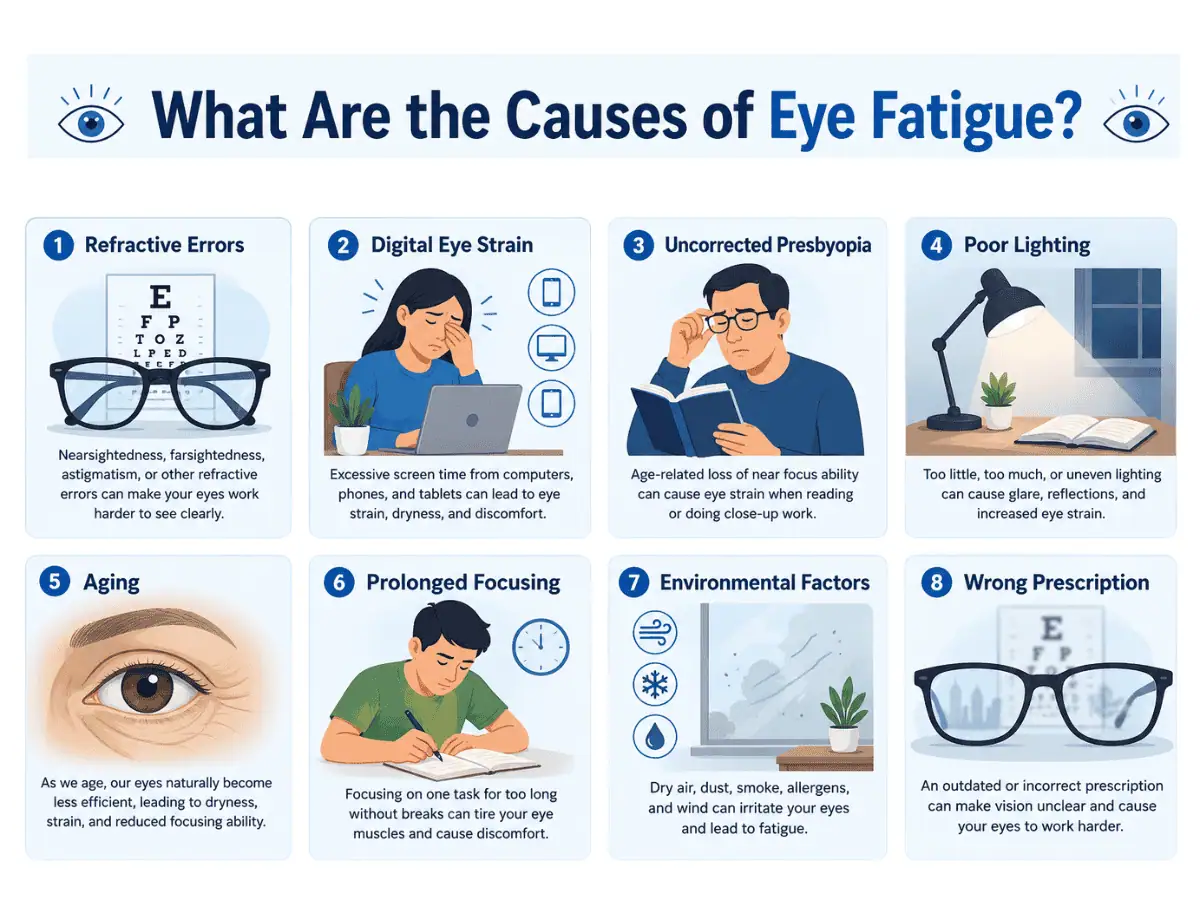
Eye fatigue can develop for several different reasons. In many cases, more than one factor is involved.
Here’s a closer look at the causes of eye fatigue:
1. Refractive Errors
Refractive errors such as nearsightedness, farsightedness, and astigmatism can force your eyes to work harder than they should. When vision is not properly corrected, the eye muscles remain under constant strain, leading to fatigue over time.
2. Digital Eye Strain
Spending hours looking at computers, tablets, smartphones, or other digital devices is one of the most common causes of eye fatigue today. People tend to blink less while using screens, which can increase dryness and discomfort while placing extra stress on the focusing muscles of the eyes.
3. Uncorrected Presbyopia
Presbyopia is an age-related condition that affects your ability to focus on nearby objects. If left uncorrected, activities like reading, texting, or working on a computer may become more challenging and place additional strain on your eyes.
4. Poor Lighting
Lighting that is too bright, too dim, or uneven can make visual tasks more difficult. Whether you are working under harsh office lights or trying to read in a dark room, poor lighting conditions can contribute to eye fatigue.
5. Aging
As we age, our eyes naturally undergo changes that can affect focusing ability, tear production, and overall visual comfort. These changes can make older adults more susceptible to eye strain.
6. Prolonged Focusing
Spending extended periods focused on a single task can tire the muscles responsible for maintaining clear vision. Reading, driving long distances, crafting, and detailed office work are common examples.
7. Environmental Factors
Dry air, wind, dust, air conditioning, and excessive screen glare can all irritate the eyes. These environmental conditions may worsen symptoms and make eye fatigue more noticeable throughout the day.
8. Wrong Prescription
Even a small change in your prescription can make your eyes work harder than necessary. Wearing outdated glasses or contact lenses may lead to discomfort, headaches, and ongoing visual strain.
What Are the Symptoms of Eye Fatigue?
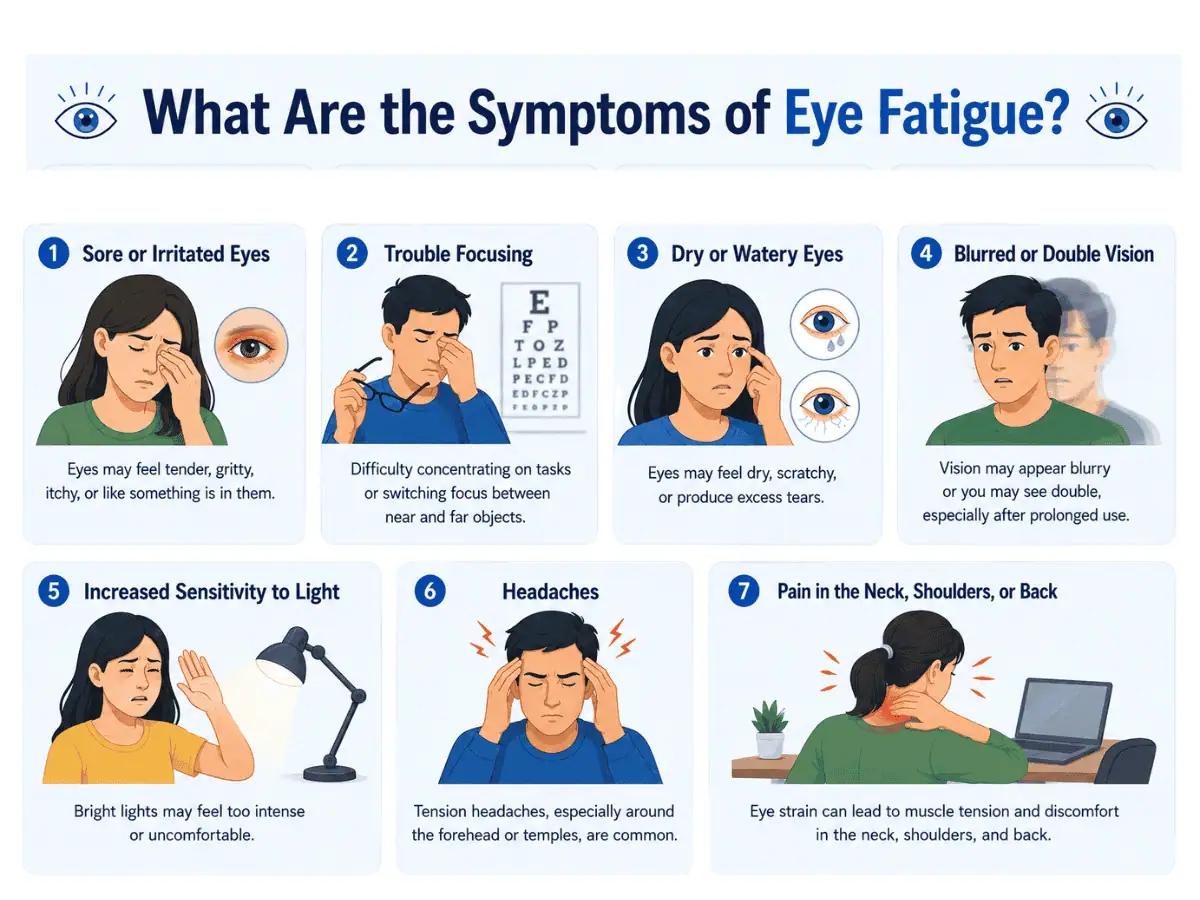
Eye fatigue can affect people differently, but certain symptoms tend to appear more frequently than others.
Here’s a closer look at the symptoms of eye fatigue:
1. Sore or Irritated Eyes
Many people describe a burning, aching, or irritated feeling after long periods of visual concentration.
2. Trouble Focusing
You may notice that it takes longer to switch focus between objects or that maintaining clear vision becomes more difficult as the day progresses.
3. Dry or Watery Eyes
Eye fatigue can disrupt normal tear production. As a result, your eyes may feel unusually dry or produce excessive tears in response to irritation.
4. Blurred or Double Vision
Overworked eye muscles can temporarily affect visual clarity, causing blurry vision or occasional double vision.
5. Increased Sensitivity to Light
Bright lights, computer screens, and sunlight may feel more uncomfortable when your eyes are strained.
6. Headaches
Eye fatigue often contributes to headaches, particularly around the forehead, temples, and behind the eyes.
7. Pain in the Neck, Shoulders, or Back
Visual discomfort frequently affects posture. Leaning closer to screens or maintaining poor positioning for long periods can lead to pain in surrounding muscles and joints.
How Long Does Eye Fatigue Last?
The duration of eye fatigue depends on what is causing it. Mild cases may improve after a short break, while symptoms caused by an incorrect prescription or underlying vision problem can continue until the issue is corrected.
For many people, discomfort improves within a few hours after resting their eyes. If symptoms persist for several days or occur frequently, it may be time to schedule a comprehensive eye examination.
How to Treat Eye Fatigue?
While eye fatigue can be frustrating, there are several ways to reduce symptoms and improve overall eye comfort.
1. Immediate Relief for Tired or Strained Eyes
a. Follow the 20-20-20 Rule
Every 20 minutes, look at something at least 20 feet away for 20 seconds. This simple habit helps relax the focusing muscles in your eyes.
b. Use Lubricating Eye Drops
Artificial tears can help relieve dryness and irritation, especially if you spend long hours working on digital devices.
c. Apply Warm or Cool Compresses
A compress placed gently over closed eyes can help reduce discomfort and provide temporary relief.
d. Blink More Frequently
People naturally blink less when using screens. Making a conscious effort to blink can help keep your eyes moist and comfortable.
e. Reduce Screen Glare
Adjust screen brightness and minimize glare from windows or overhead lighting whenever possible.
2. Lifestyle Changes and Prevention
a. Prioritize Sleep
Your eyes recover while you sleep. Consistently getting enough rest can significantly reduce symptoms of fatigue.
b. Improve Your Workspace
Position your screen at a comfortable distance and ensure proper lighting throughout your work area.
c. Stay Hydrated
Dehydration can contribute to dry eyes and visual discomfort. Drinking enough water supports healthy tear production.
d. Practice Eye Relaxation Exercises
Simple eye relaxation exercises such as focusing on distant objects, gentle eye movements, and blinking routines may help reduce strain during long work sessions.
e. Schedule Regular Eye Exams
Routine eye exams can identify vision changes, prescription updates, and underlying eye conditions before they become larger problems.
Schedule a Regular Eye Exam at InSight Vision Center in Fresno, CA to Prevent Eye Fatigue
Many cases of eye fatigue can be linked to vision changes that go unnoticed for months or even years. Regular eye exams help detect these issues early and ensure your eyes are working as comfortably and efficiently as possible.
At InSight Vision Center, our eye doctors perform comprehensive eye exams that evaluate both your vision and overall eye health. A regular eye exam may include visual acuity testing, refraction testing to determine your prescription, eye pressure measurements, pupil evaluation, eye movement testing, peripheral vision assessment, and a detailed examination of the retina and internal structures of the eye.
If you have been experiencing frequent eye strain, headaches, blurred vision, or difficulty focusing, scheduling an eye exam can help identify the underlying cause.
Ready to give your eyes the attention they deserve?
Visit InSight Vision Center in Fresno, CA for your Eye Care.
Closing Thoughts
Eye fatigue is incredibly common, especially in a world where screens are part of daily life. While occasional symptoms may improve with rest, persistent eye strain should not be ignored. Understanding the causes and taking preventive steps can go a long way toward keeping your eyes comfortable, healthy, and productive.
Frequently Asked Questions
Can eye fatigue cause headaches?
Yes, prolonged eye fatigue can lead to tension headaches, especially around the forehead and temples.
Does blue light cause eye fatigue?
Blue light may contribute to eye fatigue by reducing contrast and increasing visual discomfort, especially during extended screen use.
Can eye fatigue affect vision permanently?
No, eye fatigue does not cause permanent vision damage, but it can temporarily affect clarity and focus.
Do glasses help with eye fatigue?
Yes, prescription glasses or computer glasses can reduce fatigue, especially if you have uncorrected vision issues.
Can eye fatigue cause blurry vision?
Yes, temporary blurred vision is a common symptom of eye fatigue due to overuse of focusing muscles.
Can eye fatigue cause dizziness?
Yes, severe eye fatigue can sometimes lead to dizziness or a feeling of imbalance, especially after long screen sessions.
Are there exercises for eye fatigue?
Yes, simple exercises like blinking, focusing on distant objects, and eye rolling can help relax eye muscles.
When should I see a doctor for eye fatigue?
If symptoms persist, worsen, or interfere with daily activities, you should consult an eye care professional.
Can sleep help reduce eye fatigue?
Yes, adequate sleep allows your eyes to recover and reduces symptoms of strain and dryness.
Can eye fatigue affect productivity?
Absolutely. Eye discomfort, headaches, and difficulty focusing can lower efficiency and make it harder to stay productive throughout the day.

Dr. Azhar I. Salahuddin is an ophthalmologist and is fellowship-trained in cornea, external diseases, and refractive surgery. Dr. Salahuddin has been performing cataract surgery for over 19 years and specializes ocular reconstruction, corneal transplantation surgery as well as vision correction through a variety of intraocular lenses. Dr. Salahuddin is board-certified by the American Board of Ophthalmology and was trained at Boston University.